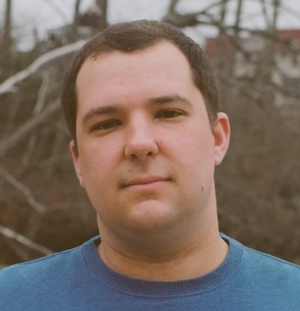
A Conversation with William Ward Butler
Kevin Bertolero: I think my favorite poem of yours is "Cleanness," and what I love most about this poem is the way you depict the body—at once as a source of pleasure, but also the ways in which the body can revolt against us. The speaker's body is throwing up blood after a tonsillectomy. The man he's hooking up with can't breath while he's sucking the speaker off because "he had done too much cocaine / when he was younger." I find that tension so interesting. And this fragility of the body and how we treat it (and one another) is something that I've found to be a common subject in your work across many, many poems, whether the bodies are dancing or eating or fucking or smoking or getting pissed on. In "Chastity," you write, "how can you be sure— / any pain, sufficiently acute, / is indistinguishable from pleasure." Why do you think this is a theme you keep coming back to? What draws you toward the body?
William Ward Butler: I think part of it is that I'm interested in the larger, structural forces that attempt to govern what we do with our bodies. Bodily autonomy is at the root of so many political issues, and the body is also at the center of how many people view morality. My poem "Cleanness" takes its title from a medieval poem of the same name (which is also the title of an excellent book by Garth Greenwell) and the original poem is very "do this, don't do that, otherwise you will anger God" — so I guess, prescriptive and proscriptive. It also does the classic thing of upholding a dualistic way of thinking where cleanliness and uncleanliness are in opposition to each other, because what is considered clean is good and what is considered unclean is bad.
In a lot of my poems, I'm interested in situations where there isn't necessarily that sense of moral clarity. The certainty that some things are always good and some things are always bad feels like a limited way to understand the world. When I write about sex, I also write about how sex can be strange and uncomfortable just as much as it can be great. Sex is really about communication, and communication is so incredibly multifaceted, which makes sex a perennially interesting subject to write about.
Another thing that leads me to write about the body is the fact that I've been teaching English at a religiously affiliated school for a few years now, and I attend chapel services twice a week as part of the school's program. It's hard not to think about the body when you're attending a Eucharist service and everything is very, "'This is my body, this is my blood.'" I was not raised religious at all, and once I figured out I was gay I had no interest in joining any religion that would hate me for who I was, but my school has a great team of pastors and chaplains; in talking with them, it's been fascinating to find out how there is, actually, a lot of queer subtext in the Bible.
I think another big thing that comes up in my poetry is the tension between wanting to adopt a belief system within organized religion and not being satisfied with external, imposed orders about how one should live. When I'm attending chapel services at my school I'm usually thinking, "I wish this was the thing for me! I wish I could be really into this," but I know I won't be satisfied with ideas about how to live and who to be as a person unless it comes directly from me.
KB: I also share that same desire, or wish that divinity and faith could feel more satisfying. I went to church school when I was younger and we attended weekly mass, but then my family kind of stopped going once I got older. But that iconography and the music and even the architecture has stuck with me. It's so appealing, though I think it can end up feeling like more of a facade than anything else. But also, there's the history of the church which is fascinating in and of itself. There are pieces of that early philosophy—particularly in the writing of Saint Augustine, for me—that feel resonant still.
There are so many religious themes in your first chapbook, Life History, from poems like "Act of God," "Carpentry," or even "Apocrypha" in which you write,
I want a deity to terrify me,
a fear that commands me to fear-not.
To live my life under the thumb would mean
there is still a hand to guide me, to protect me
from what I want, and can never hope to have.
Before me were others exactly like me.
I assume these were written before you started teaching at your current school. Has your teaching experience changed the way you think about these older poems? Or has it affected the way you approach topics like faith in your newer work? In a more recent poem like "Church of Cosmic Consciousness," you write, "At the school / where I teach, children / recite the Lord's Prayer / while I think about order: / too much, and not enough." Has working with these particular students changed your writing in any way?
WWB: Yeah, I kind of had a preoccupation with all of that even before I started teaching, and I feel like poetry was the outlet to explore what I was thinking. I feel pretty distant from most of those poems by now but they're definitely working through some of the same questions that I have now and am thinking about with more recent poems. If the older poems were about wanting an element of faith in one's life, I think my more recent poems are exploring the complexities of faith and how that manifests for different people and ultimately the disappointment of not being able to find exactly what you're looking for in a neat, all-wrapped-up sort of way.
There's that William Blake quote that goes: “I must create a system, or be enslaved by another man's. I will not reason and compare: my business is to create.” I think that sentiment is at the heart of many of the poems I've been writing recently. Especially how queerness allows people to make their own way in life, even if that may be more difficult because there's less of a sense of how one's life should be.
I think poetry is really the closest I've gotten to following a religion, in a way, although I know poetry isn't religion, but there's what I would consider to be some overlapping elements. I think of poetry as a way to be in community with other people; I've definitely met a lot of people through poetry and have made friendships I otherwise wouldn't have made, and been in spaces I otherwise wouldn't have been in. I also think of poetry as a connection to the past and all the poets who have come before us, in a similar way to how religion can provide a connection to the past. And, one thing that poetry can do is establish a connection to the future. For a long time I've been floored by the poem "Hidden Things" by C.P. Cavafy, especially this particular translation by George Economou and Stavros Deligiorgis:
Hidden Things
From what I said and from what I did
let them not try to find who I was.
A barrier went up and altered
my actions and my way of life.
A barrier went up and prevented
me so many times from speaking my mind.
The least noticed of my actions,
and the most veiled of my writings—
from these alone they'll feel as I have felt.
But maybe it wouldn't be worth taking
so much trouble and effort to know me.
Later—in a more perfect world—
anybody else made just like me
will surely appear and will create freely.(1908)
When I first read that poem, I was so shocked by how clearly Cavafy was addressing the future, and future readers and writers, and how he was thinking about how his work would be placed within a historical context. It's interesting to think about how poems are created in a certain time period and also have the capacity to reach far beyond it.
KB: That's a really fascinating way of thinking about the work of poetry in relation to faith. You know, when I attend the Kettle Pond Writers' Conference every summer, it's always a week of near ecstasy for me, just being around other poets talking about poetry—that's certainly a congregation of sorts. From our past conversations, it seems like you've had similar experiences at various writing conferences. And regarding community, you were named poet laureate of Los Gatos, California in 2024. Can you speak a bit about how this way of thinking has influenced some of the work you've done as laureate? How have you taken this philosophy off-the-page and into your own local community? And then more broadly, how do you see yourself within the larger community of poets online? You and I have maintained a friendship across many years now living on opposite coasts. Do your approaches to the local and the virtual intersect in any way?
WWB: The laureateship has been fun, it's an interesting experience to be known as a go-to person for poetry in a local community. It's led to a lot of conversations with people about poetry, including people who are out of school and have never formally studied poetry but just have questions, or an interest in it. There's places like summer writing workshops and AWP where everywhere you look, people are into poetry and writing, but in a local context it can sometimes feel difficult to find other people who are interested in poetry. It's been really nice to connect with people nearby and do things like write and discuss poetry together in free workshops at the library, read poems from local poets as part of an annual poetry contest, and generally be available as a resource for people who want to engage more with poetry but don't necessarily know how. The experience of being the town's poet laureate has been really beautiful in that way, it's made me realize there's more of an audience for poetry than one might think—there's seemingly at least one article every year that asserts no one reads poetry anymore, but I just don't think that's the case!
Most of my enjoyment of being a part of a larger community of poets online has been to platform the work of other poets with the online poetry journal I co-edit, Frozen Sea. I was talking to someone this past summer at the Napa Valley Writers' Conference and she told me that she noticed how I make things happen that I want to see happen; this was after I had organized a group chat and convinced a group of people from the conference to meet at a wine bar downtown that also had a pinball arcade right next to it. I sort of felt like, I want to hang out with people, I'm sure other people want to hang out, but some people might be waiting for someone to organize something and I don't mind being that guy. I think that impulse partially comes from being a teacher too, but yeah, I wanted to start a journal so I did, and it's been incredibly enjoyable. I'm always so happy to read someone's poetry for the first time that I find to be exciting, and to be able to put that poetry in front of a wider audience. Your work, Kevin, with & Change and Ghost City Press was a big inspiration for Frozen Sea—there's a certain DIY ethos that's really important for poetry, I think, and I feel like some of the best things that have happened in my writing life have been because I've gone out and made them happen.
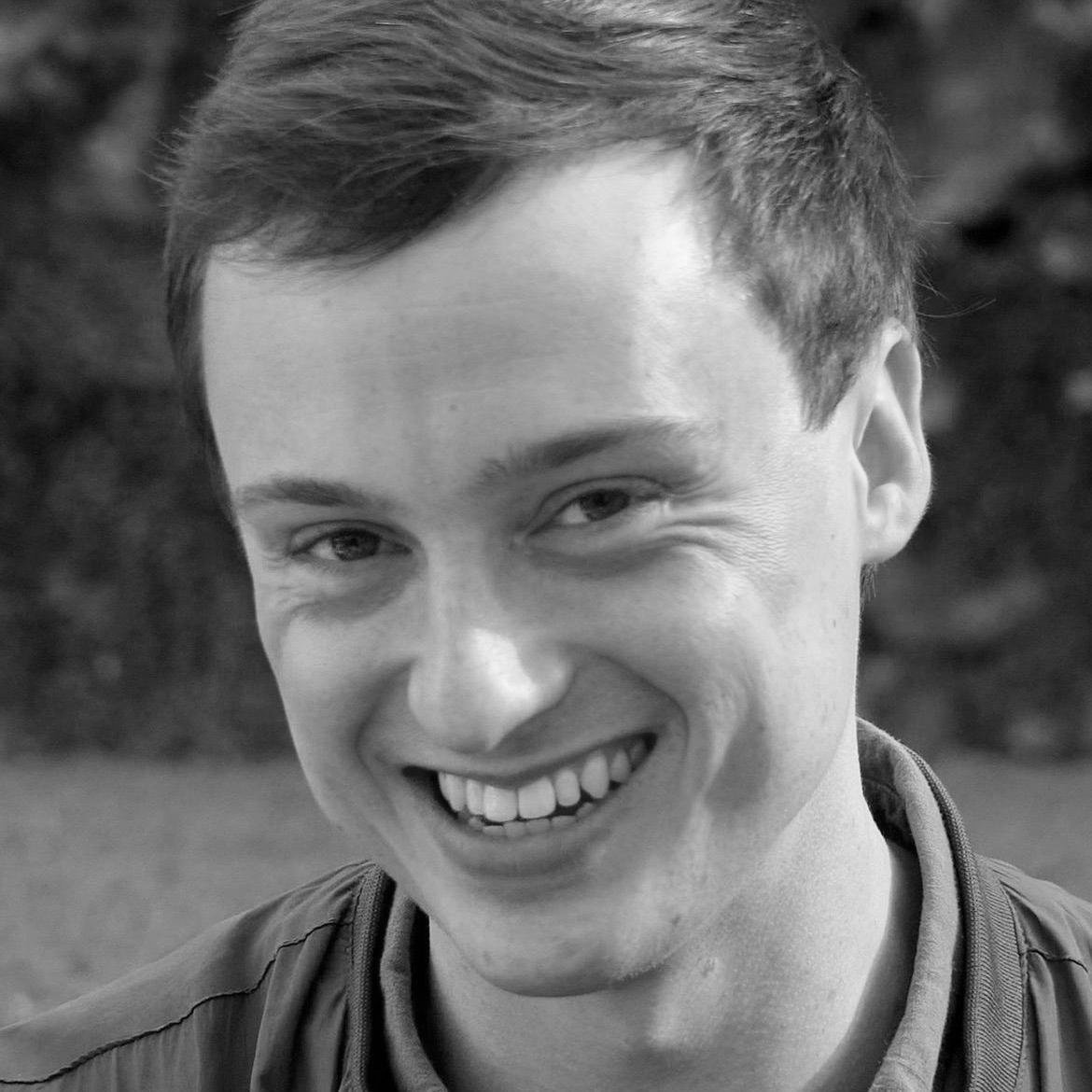
William Ward Butler is the poet laureate of Los Gatos, California. He is the author of the chapbook Life History from Ghost City Press. A finalist for The Arkansas International’s C.D. Wright Prize for Poetry and Terrain.org’s Annual Poetry Contest, his recent poems have appeared or are forthcoming in the Academy of American Poets Poem-a-Day, Bennington Review, Five Points, Hunger Mountain, RHINO, and other journals. He is the co-creator of Frozen Sea, an online poetry journal publishing exceptional work from early-career poets in a mobile-friendly format. He is also a poetry reader for TriQuarterly, the literary magazine of Northwestern University.
Kevin Bertolero is the founding publisher of both & Change Poetry and Ghost City Press. He was also a founding member of the Kettle Pond Writers’ Conference. He holds degrees in English literature from SUNY Potsdam and the University of New Hampshire, as well as an MFA from New England College where he currently teaches in the graduate program for Professional Writing. He lives in Portland, Maine.